Volume Mirage: How Fake Trading Activity on Crypto Exchanges Leaves US Investors Stranded at the Order Book
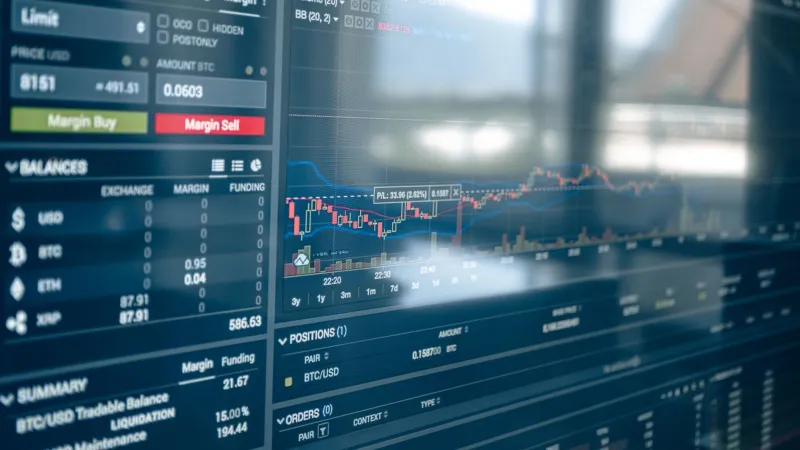
Open any major crypto data aggregator and the numbers look impressive. Hundreds of exchanges reporting tens of billions of dollars in daily trading volume. Deep order books stacked with bids and asks. Tight spreads suggesting efficient, liquid markets. For the average US retail investor, those figures carry an implicit promise: that when the moment comes to buy or sell, the market will be there to meet you.
It frequently is not.
The gap between reported exchange volume and actual, usable liquidity is one of the most consequential — and least discussed — structural problems in digital asset markets today. Understanding how that gap is manufactured, and learning to measure real depth rather than statistical noise, is no longer optional for investors who intend to move anything beyond trivial sums.
What "Liquidity" Actually Means in Practice
Liquidity, at its most functional definition, is the ability to execute a trade at or near the price you expect, in the size you need, without materially moving the market against yourself. A market is genuinely liquid when there are enough real counterparties — buyers when you want to sell, sellers when you want to buy — to absorb your order without causing price distortion.
Volume, by contrast, is simply the total dollar or coin value of all trades executed over a given period. Volume can be high while liquidity remains dangerously thin. The two are related but not synonymous, and conflating them is precisely how many investors end up surprised by severe slippage on positions they believed would fill cleanly.
The Mechanics of Phantom Volume
Three primary mechanisms drive the inflation of exchange volume figures, each operating through different means but arriving at the same destination: numbers that look credible on a dashboard but bear little relationship to the market's actual capacity.
Wash Trading is the most prevalent. In this practice, a single entity — or a coordinated group — simultaneously controls both sides of a trade, buying and selling the same asset to itself in rapid succession. No real economic transfer occurs. No genuine price discovery happens. Yet every round trip registers as legitimate volume on the exchange's reporting ledger. Academic research and independent analyses have repeatedly estimated that wash trading accounts for a significant portion of reported volume across unregulated or lightly regulated venues. One frequently cited study from the National Bureau of Economic Research estimated that the majority of reported Bitcoin volume on certain exchanges was fabricated.
Spoofing operates at the order book level. A trader places large buy or sell orders with no intention of allowing them to execute, creating the appearance of substantial demand or supply at specific price levels. Other market participants — including algorithmic systems — react to that apparent depth, adjusting their own behavior accordingly. The spoofer then cancels the orders before they fill, having already profited from the price movement they induced. The result is an order book that looks deep but evaporates precisely when a real investor tries to trade into it.
Artificial Volume Incentives are structural rather than deceptive in the traditional sense, but their effect on reported metrics is similarly distorting. Some exchanges offer rebates, fee discounts, or token rewards tied to trading activity. This creates rational economic incentives for high-frequency participants to generate volume for its own sake, inflating reported figures without any corresponding increase in genuine market-making depth.
Why This Damages US Retail Investors Specifically
The harm is not abstract. Consider a US investor who identifies an opportunity in a mid-cap token and intends to build a $200,000 position on an exchange reporting $50 million in daily volume for that asset. On paper, their order represents less than half a percent of daily activity — seemingly trivial. In practice, if the majority of that reported volume is wash-traded or otherwise artificial, the real order book may have only a few hundred thousand dollars in genuine resting liquidity across a meaningful price range. Executing that $200,000 buy could move the market by several percentage points, with each successive fill occurring at a worse price than the last.
This phenomenon — commonly called market impact or slippage — is not merely an inconvenience. On a $200,000 position, a three percent adverse move from order execution alone represents $6,000 in immediate, invisible losses before the trade has had a single day to perform.
The exit is frequently worse than the entry. Investors who bought into thin liquidity at inflated fill prices often discover that selling a large position requires accepting even steeper discounts, particularly during periods of market stress when genuine liquidity providers withdraw and the artificial volume disappears entirely.
A Framework for Evaluating Real Order Book Depth
Not all exchanges operate with inflated metrics, and distinguishing genuine liquidity from manufactured volume is a learnable skill. Several practical approaches can help US investors assess whether a venue's reported activity reflects real market depth.
Examine Market Impact Estimates Directly. Reputable data platforms now publish liquidity metrics beyond raw volume — specifically, the estimated price impact of executing a standardized order size (often $100,000 or $500,000) on a given exchange for a given asset. These figures cut through volume inflation because they measure what actually happens when real money enters the order book. Lower market impact scores indicate genuine depth; higher scores expose thinly disguised illiquidity regardless of what the volume column reads.
Compare Volume to Open Interest on Derivatives. For exchanges offering perpetual futures or options, open interest provides a harder-to-fabricate proxy for genuine market participation. An exchange claiming enormous spot volume but reporting modest open interest relative to peers warrants skepticism.
Prioritize Regulated or Audited Venues. US-regulated exchanges operating under oversight from the SEC, CFTC, or FinCEN face meaningful legal exposure for allowing or facilitating wash trading. While regulation is not a guarantee of perfect liquidity, it substantially raises the cost of fabricating volume and aligns exchange incentives toward genuine market-making. For significant positions, US investors are generally better served by regulated domestic venues than by offshore platforms optimizing for reported volume rankings.
Watch the Spread Under Stress. Artificial liquidity tends to vanish during volatile market conditions. Monitoring how an exchange's bid-ask spreads behave during periods of rapid price movement reveals whether the resting order book reflects genuine commitments or ephemeral spoofed depth. An exchange whose spreads widen dramatically during normal volatility is signaling thin real liquidity beneath the surface.
Use Aggregators That Adjust for Suspected Wash Volume. Several independent research firms and data providers now publish adjusted volume figures that apply statistical filters to remove likely fabricated activity. While no methodology is perfect, these adjusted figures offer a more grounded baseline than raw reported numbers.
The Regulatory Trajectory
US regulators have increasingly acknowledged the phantom liquidity problem. The SEC and CFTC have both taken enforcement actions against manipulation in crypto markets, and ongoing legislative efforts to establish a comprehensive digital asset regulatory framework include provisions specifically targeting wash trading and spoofing. As regulatory clarity improves, the expectation is that exchanges competing for compliant US customers will face stronger disincentives to tolerate or facilitate artificial volume.
For investors operating today, however, the regulatory environment remains a work in progress. The practical defense is individual diligence — treating reported volume as a starting point for inquiry rather than a reliable indicator of execution quality.
Conclusion
The headline number on a crypto exchange dashboard is a marketing artifact as much as it is a market signal. Billions in reported volume can coexist with an order book that fractures under the weight of a moderately sized retail order. Recognizing this disconnect — and building a systematic approach to evaluating genuine liquidity rather than manufactured metrics — is one of the more consequential analytical skills a US crypto investor can develop. The market will not warn you when the depth disappears. That responsibility falls entirely to you.