Frozen Assets: How Liquidity Gaps Can Trap US Crypto Investors When Markets Move Against Them
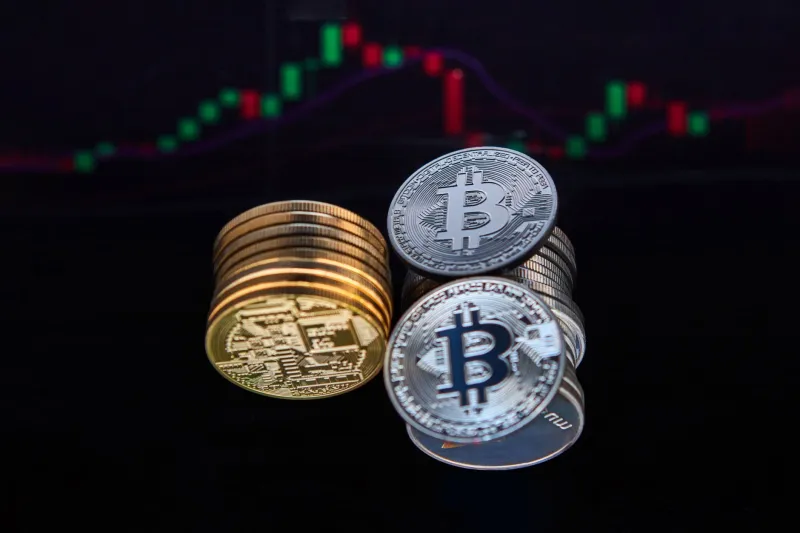
There is a quiet assumption embedded in most crypto investment strategies: that if you own an asset, you can sell it. On the surface, this seems self-evident. Yet in practice, the gap between holding a digital asset and exiting at a reasonable price can be vast — and in volatile markets, that gap can widen into a chasm overnight.
Liquidity is not a feature that cryptocurrency projects advertise prominently. Trading volumes look impressive on data aggregators, wallets display balances in clean dollar figures, and exchange interfaces project an air of seamless execution. But beneath that polished surface lies a more complicated reality: one where thin order books, fragmented trading venues, and cascading sell pressure can leave even holders of well-known tokens stranded at exactly the moment they need to move.
At NugenCoin HQ, we believe that owning the future means understanding not just what you hold, but how — and whether — you can convert it when it counts.
What Liquidity Actually Means in a Crypto Context
In traditional equity markets, liquidity refers broadly to how quickly an asset can be bought or sold without materially affecting its price. In crypto, the definition carries additional complexity. The same token may trade across dozens of exchanges simultaneously, with wildly different order depths, spread widths, and daily volumes on each platform.
When analysts cite a token's 24-hour trading volume, they are often aggregating data from centralized exchanges, decentralized protocols, and over-the-counter desks — figures that can be inflated by wash trading or arbitrage bots. Genuine, accessible liquidity — the kind that lets a retail investor in Des Moines or Dallas exit a $50,000 position without moving the market — is frequently a fraction of what headline numbers suggest.
The order book is the most honest lens through which to evaluate this. It reveals, in real time, exactly how many buy orders exist at each price level. A shallow order book might show only a few thousand dollars of bids within a one or two percent range of the current price. Sell into that thin book with any meaningful size, and your average execution price deteriorates rapidly — a phenomenon known as slippage.
The Illusion of Safety in Major Tokens
It would be reasonable to assume that Bitcoin and Ethereum, the two largest cryptocurrencies by market capitalization, are immune to meaningful liquidity risk. For most retail-scale transactions, that assumption holds. But it breaks down in specific circumstances that are more common than investors expect.
Consider what happens during a sharp, unexpected market downturn — the kind triggered by a major exchange collapse, a Federal Reserve policy shock, or a sudden regulatory announcement. In those moments, buy-side liquidity evaporates. Market makers, who normally provide the bids that allow sellers to exit, pull their orders to avoid being on the wrong side of a cascading move. The result is a market that looks liquid under normal conditions but behaves like a ghost town precisely when you need an exit.
In November 2022, following the FTX collapse, Bitcoin's order book depth on several major exchanges dropped by more than 50 percent within hours. Investors attempting to sell faced spreads and slippage that would have been unimaginable days earlier. For holders of smaller altcoins listed primarily on FTX itself, the situation was categorically worse — the exit simply did not exist.
Mid-Cap and Small-Cap Tokens: A Different Order of Risk
If liquidity risk is a concern for Bitcoin, it is a critical vulnerability for the vast majority of tokens below the top ten by market cap. Many projects that attract significant investor interest — fueled by compelling whitepapers, aggressive social media campaigns, or celebrity endorsements — trade with daily volumes that sound impressive in absolute terms but collapse under any real selling pressure.
A token posting $5 million in daily volume may appear healthy until you recognize that a single institutional exit of $500,000 represents ten percent of that entire day's activity. Retail investors who accumulated positions gradually over weeks can find themselves unable to exit within a reasonable price range in a single session, let alone a single hour.
Decentralized exchanges (DEXs) introduce an additional layer of complexity. Liquidity on these platforms is provided by pools, not order books. When liquidity providers withdraw their capital — which they are free to do at any time — available depth can evaporate instantly. Investors trading on DEXs without monitoring pool depth are, in effect, flying blind.
How to Evaluate True Liquidity Before You Buy
Developing a pre-purchase liquidity assessment framework is not optional for serious investors — it is foundational. The following criteria provide a practical starting point.
Order book depth at multiple price levels. Before entering a position, examine the order book on your primary exchange. How many dollars in bids exist within two percent of the current price? Within five percent? Compare this figure against the size of your intended position.
Bid-ask spread under normal conditions. A consistently tight spread — fractions of a percent — signals a well-functioning, competitive market. A spread exceeding one or two percent on a supposedly liquid asset is a warning sign.
Volume consistency over time. Single-day spikes in trading volume are often misleading. Review 30- and 90-day volume trends. Tokens with erratic volume profiles are inherently harder to exit on your schedule.
Exchange distribution. Determine what percentage of a token's total volume is concentrated on one or two platforms. Heavy concentration means that if those exchanges experience technical issues, regulatory action, or insolvency, your primary exit route disappears.
Slippage estimates for your position size. Several tools — including aggregator platforms and exchange simulators — allow investors to model expected slippage for a given order size. Running this calculation before you buy, not after, is the discipline that separates prepared investors from reactive ones.
Stress-Testing Your Portfolio's Exit Strategy
Evaluating liquidity at the point of purchase is necessary but not sufficient. Market conditions change, and a portfolio that exits cleanly in a calm market may face severe friction during a crisis. The following stress-test framework helps US investors identify hidden vulnerabilities.
Scenario one: Rapid 30% market-wide decline. Assume buy-side order book depth drops by 60 percent across all exchanges simultaneously. At what price can you realistically exit each position? What is your total loss relative to current market value, accounting for slippage?
Scenario two: Exchange-specific disruption. Assume your primary exchange suspends withdrawals or trading for 72 hours. Which of your holdings are accessible on alternative platforms? Which are not?
Scenario three: Token-specific liquidity crisis. Assume a project you hold announces a major security breach or regulatory investigation. Volume spikes, but almost entirely on the sell side. What is your realistic exit window before price discovery moves dramatically against you?
Running these scenarios annually — or after any significant portfolio rebalancing — forces a level of strategic clarity that passive holding rarely demands.
Building Liquidity Awareness Into Your Ongoing Strategy
The most actionable takeaway from understanding liquidity risk is a shift in how US investors think about position sizing. Concentrating a meaningful percentage of net worth in tokens with thin markets is not a bold investment strategy — it is an exposure to a specific, quantifiable risk that many investors have simply not priced in.
Diversifying across assets with genuinely different liquidity profiles, maintaining a baseline allocation to the most deeply liquid cryptocurrencies, and setting clear exit triggers before entering positions are practices that transform liquidity awareness from abstract knowledge into portfolio protection.
At NugenCoin HQ, the principle is straightforward: the ability to act decisively — to buy when opportunity presents and sell when prudence demands — is itself a form of financial capital. Protecting that ability means taking liquidity seriously long before the moment you need it most.