Phantom Depth: How Spoofing and Layering Hollow Out the Order Book Before Your Trade Executes
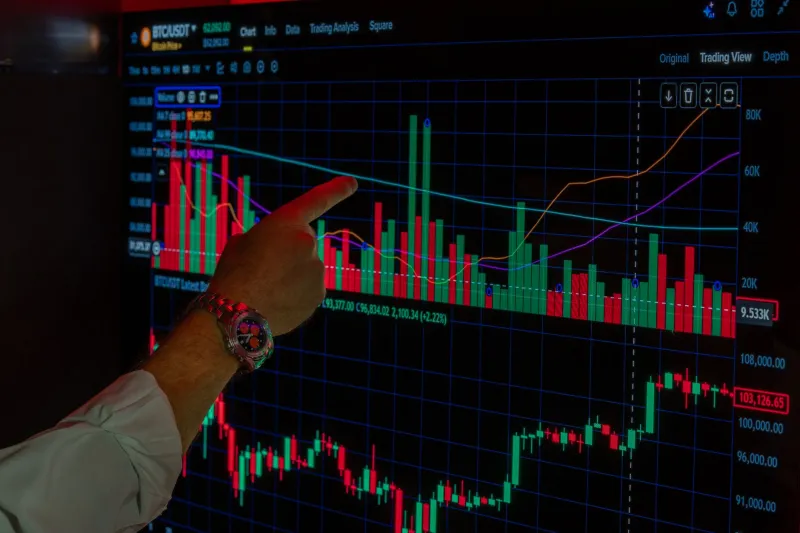
There is a particular frustration familiar to active crypto traders: you study the order book, identify what appears to be a thick wall of buy or sell orders at a favorable price, place your limit order with confidence — and then watch the market move against you as that wall dissolves in milliseconds. Your order either fills at a materially worse price or sits unfilled while the asset moves out of range entirely. You were not imagining the liquidity. It was there. Then it was not.
This phenomenon, broadly categorized under the terms spoofing and layering, is one of the most consequential and least discussed hazards facing retail participants on US crypto exchanges today. While regulators have pursued spoofing cases aggressively in traditional equity and futures markets, the crypto space — with its fragmented venues, inconsistent surveillance infrastructure, and evolving legal framework — remains fertile ground for these tactics.
What Spoofing Actually Looks Like in Practice
Spoofing, at its core, involves placing large orders with no genuine intention of allowing them to execute. A sophisticated actor places a substantial bid several levels below the current market price. Retail traders and algorithmic systems read this as evidence of strong downside support — a signal that informed money is willing to buy at that level. This perception nudges other participants to place their own bids nearby or discourages them from selling aggressively. The moment the spoofer has achieved the price movement they wanted, they cancel their original order before it can be touched.
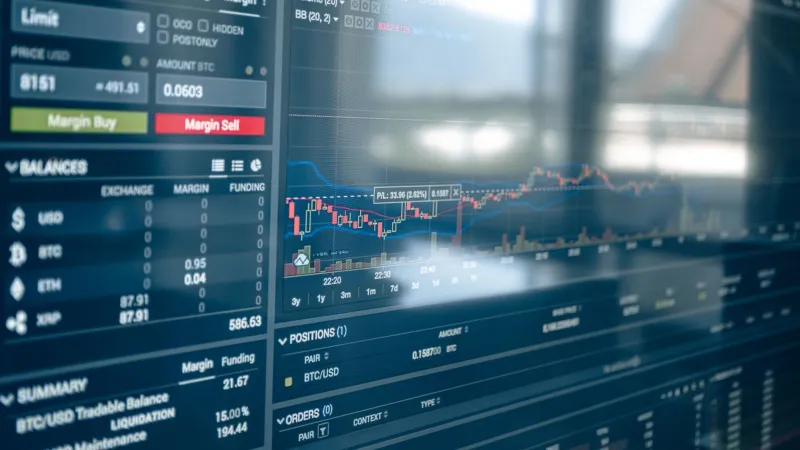
Layering is a more elaborate variation. Rather than a single large order, the actor populates multiple price levels with stacked bids or offers, constructing what appears to be a deep, graduated order book. The visual effect on a standard exchange interface is convincing: a column of buy support stretching several percentage points below spot. In practice, every one of those orders carries a cancellation instruction that fires automatically if the market price approaches them.
The result for a retail investor watching that same order book is a fundamentally distorted picture of supply and demand.
Why Crypto Markets Are Particularly Vulnerable
In US equity markets, the SEC has prosecuted spoofing under both the Dodd-Frank Act and the Securities Exchange Act, and exchanges employ real-time surveillance systems specifically designed to flag order-to-trade ratios and cancellation patterns. Crypto markets, by contrast, are still working through the regulatory architecture necessary to enforce equivalent standards uniformly across spot trading venues.
Beyond the regulatory gap, several structural features of crypto markets amplify the problem. Many exchanges operate their own market-making desks or have close commercial relationships with the algorithmic firms providing their liquidity. Order book data is not always consolidated across venues, meaning the "depth" visible on one platform may be entirely disconnected from actual executable liquidity elsewhere. And because crypto trades around the clock across global venues, the thin-liquidity windows that make spoofing most effective — late evenings, weekends, periods around major economic data releases — occur with far greater frequency than in traditional markets.
How Your Limit Orders Get Caught in the Crossfire
Consider a practical scenario. You are targeting a purchase of a mid-cap altcoin and you identify what appears to be a strong bid cluster at a price 2% below the current market. You place a limit sell order slightly above that cluster, expecting it to act as a floor that keeps your position protected. A spoofing actor, having manufactured that bid cluster to push the price upward, cancels those orders the moment the market ticks in their direction. The floor you were relying on disappears. The next genuine bids sit 6% lower. Your limit order, now resting in a vacuum, either goes unfilled or — if you have set it to fill at market in the absence of liquidity — executes at a price you never modeled.
This dynamic is not theoretical. It plays out in varying degrees of severity across US crypto exchanges every trading session, and it disproportionately harms investors who rely on limit orders as a risk management tool.
Distinguishing Genuine Depth from Manufactured Depth
Developing the ability to read an order book critically — rather than taking its apparent depth at face value — is an essential competency for anyone trading on US crypto platforms today. Several indicators can help separate real liquidity from orchestrated illusion.
Order persistence over time. Genuine resting limit orders tend to remain in the book across multiple price updates. Use your exchange's order book history or a third-party tool such as Bookmap or CoinGlass to observe whether large orders at key levels stay in place as the market approaches them or vanish consistently before execution. Repeated cancellation patterns at the same price levels are a significant warning sign.
Order size relative to average volume. A single order representing 15% of a token's average daily volume sitting quietly in the book at a static price warrants skepticism. Genuine institutional buyers and sellers typically work orders in ways that minimize market impact — they do not advertise their full size.
The spread between visible depth and actual trade prints. Compare the size of orders sitting in the book against the actual trade sizes appearing on the time-and-sales tape. If enormous orders are visible but trades are consistently small, the large orders are unlikely to be genuine.
Behavior at round-number price levels. Spoofed orders cluster disproportionately at psychologically significant prices — round numbers, prior highs and lows, and moving average levels — because these are the points where their presence most effectively influences other participants' behavior.
Practical Adjustments for US Crypto Investors
Recognizing the problem is only half the equation. Adjusting your execution approach in response is where the real protection lies.
First, reduce your reliance on visible order book depth as a primary signal for limit order placement. Use it as one data point among several rather than a definitive map of where the market will hold. On-chain flow data, funding rates, and trade volume analysis provide context that is far more difficult to fabricate.
Second, consider using time-weighted or volume-weighted execution strategies for larger positions rather than single limit orders resting at a fixed price. Breaking a position into smaller tranches reduces your exposure to any single liquidity event.
Third, evaluate the exchange infrastructure you are using. Platforms that publish transparent market surveillance reports, maintain clear policies on market-maker conduct, and operate under robust regulatory oversight — including FinCEN registration and, where applicable, state money transmission licensing — offer at least some structural deterrent against the most egregious manipulation.
Finally, treat periods of unusually thin volume with heightened caution. The overnight and weekend sessions that characterize 24-hour crypto markets are precisely when manufactured order book depth is easiest to sustain and most dangerous to trade against.
The Broader Principle
Markets function on trust — specifically, the trust that the prices and quantities displayed in an order book represent genuine economic intentions. When that trust is systematically undermined by actors whose business model depends on deception, the burden of adaptation falls on retail participants who lack the technological infrastructure to compete on equal terms.
At NugenCoin HQ, the position is straightforward: trading smarter means understanding not just what the market shows you, but why it shows you that, and who benefits from your believing it. The order book is a tool. Like any tool, it can be manipulated by those with sufficient resources and motivation. Knowing that — and adjusting your strategy accordingly — is what separates disciplined investors from those who consistently find themselves on the wrong side of a trade that looked perfectly reasonable seconds before it went bad.