The Execution Gap: How Your Market Order Fills at a Price That Vanished Before You Clicked
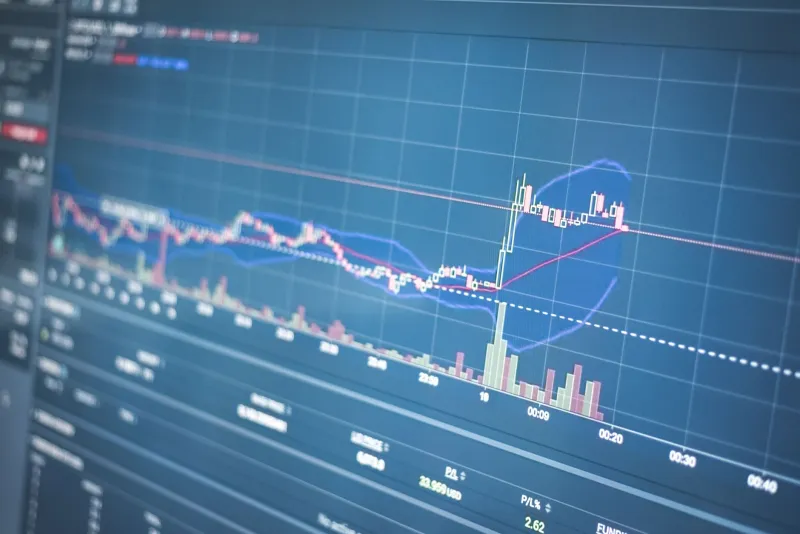
There is a moment between clicking 'buy' and receiving a confirmation that most crypto investors never think about. In traditional equity markets, that window is measured in milliseconds. In cryptocurrency markets — fragmented across dozens of exchanges, liquidity pools, and order books operating in different time zones and under different technical architectures — that window can be long enough for the entire price landscape to shift beneath your feet.
What you experience on the other side of that gap is called execution slippage. What causes it, at a structural level, is something more insidious: phantom liquidity.
What Phantom Liquidity Actually Means
Liquidity, in its simplest form, is the availability of willing counterparties at a stated price. When your exchange dashboard shows Bitcoin available at $67,420, it is telling you that there are resting limit orders on the book at or near that price ready to be matched against your market order.
Phantom liquidity refers to the condition where that displayed depth does not genuinely exist at the moment your order attempts to execute. The bids and asks you see on the screen were accurate — perhaps 50 to 200 milliseconds ago. By the time your order traverses the network, clears authentication, enters the queue, and reaches the matching engine, those orders may have been cancelled, partially filled by another participant, or repriced entirely.
This is not a glitch. It is a structural feature of how modern crypto markets are built.
High-frequency trading firms and sophisticated market makers maintain the ability to update or cancel resting orders in microseconds. Retail traders operating through standard browser-based or mobile interfaces cannot compete on that timescale. The result is an asymmetry: the prices retail investors see are snapshots of a market that is already moving away from them.
The Three Mechanisms Draining Your Returns
1. Latency Arbitrage
When you place a market order through a retail-facing exchange, your instruction does not instantly reach the matching engine. It travels through your internet connection, the exchange's API gateway, internal routing infrastructure, and finally the order book itself. Each hop introduces delay.
During that delay, co-located trading algorithms — firms that physically place their servers inside the same data centers as exchange matching engines — can detect directional pressure in the market and adjust their resting orders before your trade arrives. They are not front-running your specific order in a legally actionable sense. They are simply operating at a speed that makes your quoted price a historical artifact by the time you transact.
For a $5,000 market buy on a mid-cap altcoin, this dynamic alone can produce 0.3% to 0.8% in adverse price movement — between $15 and $40 on a single trade.
2. Order Routing Decisions You Cannot See
Many US-facing crypto platforms do not route your order to the exchange's native order book at all. Instead, they route through internal liquidity pools, third-party market makers, or aggregated venues. The platform earns payment for order flow or a spread in the process.
This is legal. It is also largely invisible to you. The price you receive may be technically within a stated slippage tolerance while still being meaningfully worse than what a direct-access, limit-order strategy would have produced. Platforms are not required to show you the best available execution price across all venues — only that they met their own disclosed standard.
3. Order Book Gapping During Volatility
Crypto markets are prone to sudden, sharp moves that temporarily remove liquidity from entire price ranges. During a news-driven spike or cascade liquidation event, the visible order book can gap — meaning there are no resting orders between your intended price and the next available level.
A retail trader placing a $50,000 market order during a 2% intraday swing can find their execution scattered across price levels they never anticipated, with the average fill 1.5% to 3% worse than the quote they observed before placing the order. On $50,000, that represents $750 to $1,500 in unexpected cost on a single transaction.
A Real-World Illustration
Consider an investor in Atlanta who decides to allocate $20,000 into Ethereum following a positive protocol announcement. The displayed price on their exchange is $3,480. They place a market order.
By the time the order executes — accounting for network latency, internal routing, and the fact that other participants reacted to the same announcement moments earlier — the fills come back at an average of $3,521. The investor paid $235 more than they expected. They may not notice. The confirmation screen shows a successful transaction. The loss is silent.
Multiply that experience across a year of active trading and the cumulative drag on portfolio performance becomes material.
Tactical Solutions for Smarter Execution
Use Limit Orders as Your Default
The single most effective change any retail investor can make is replacing habitual market orders with limit orders. A limit order specifies the maximum price you are willing to pay. It will not fill at a worse level. The tradeoff is that it may not fill immediately — or at all if the market moves away — but for most non-time-sensitive trades, the execution quality improvement outweighs the inconvenience.
For liquid assets like Bitcoin or Ethereum, placing a limit order 0.1% to 0.2% above the current ask during normal market conditions typically results in a fill within seconds while completely eliminating the phantom liquidity problem.
Break Large Orders Into Tranches
For position sizes above $10,000, avoid sending a single large market order. Divide the total into smaller tranches executed over five to fifteen minutes. This approach, known informally as time-weighted average price (TWAP) execution, reduces your market impact and avoids consuming multiple price levels in a single transaction.
Some platforms offer algorithmic order types that automate this process. If yours does not, manual tranching is still significantly more effective than a single large market order.
Trade During Peak Liquidity Windows
Crypto markets are global, but liquidity is not uniformly distributed across the clock. The overlap between US and European trading hours — roughly 8:00 AM to 12:00 PM Eastern Time — tends to produce the tightest bid-ask spreads and the deepest order books. Executing during these windows reduces the probability of encountering phantom liquidity and improves the reliability of the prices you observe.
Avoiding low-liquidity periods — late-night US hours, weekends for certain altcoins, and the immediate aftermath of major news events — meaningfully reduces execution risk.
Verify Execution Quality After Every Trade
Develop the habit of comparing your average fill price against the price displayed at the moment you placed your order. Most platforms provide this data in your trade history. If you consistently observe fills that are 0.5% or more worse than the quoted price, that is a signal that your platform's routing architecture is not working in your favor — and a reason to evaluate alternatives.
The Broader Principle
Crypto markets offer extraordinary opportunity, but they are not neutral infrastructure. They are built by institutions with their own economic incentives, and the retail investor who treats the displayed price as a guaranteed contract will systematically transfer wealth to participants who understand the gap between what is shown and what is received.
At NugenCoin HQ, we believe that trading smarter begins with understanding the mechanics of the arena you are entering. Phantom liquidity is not a conspiracy — it is a feature of market microstructure that every serious US crypto investor must account for. The investors who close that execution gap are the ones who compound returns over time. The ones who ignore it simply subsidize the rest of the market.
Knowing the difference is the first step toward owning the outcome.